Recreating the Country
  • Home
  • be Challenged
    • Design to restore lost biodiversity >
      • Diversity >
        • Making a list of plants for revegetation
      • Structure >
        • Ecology Snapshot - wildlife and their habitat
      • Species survival
      • Location - connections
      • Blueprint for Recreating the Counrty
    • Biodiversity and profit >
      • Designing for profit
    • Managing sustainable biorich landscapes
  • be Informed
    • Indigenous flora of the Geelong district >
      • Indigenous plants - what & why
      • Acacias, wattles of the Geelong Region
      • Acacias - the cafes of the bush
      • Allocasuarinas/drooping sheoaks, Black Sheoak & Callitris glaucophylla/cypress-pine
      • Bursaria spinosa, Sweet Bursaria
      • Eucalypts, The Sentinals
      • Exocarpos cupressiformis, Cherry Ballart
      • Moonah, Melaleuca lanceolata
      • Small riparian myrtles
      • Wedge-leaf/Giant Hop-bush, Dodonaea viscosa
      • Wild Plants of Inverleigh
      • Tree Violet - as tenacious as a terrier
    • Nurseryman's diary >
      • Regent Honeyeater - a good news story
      • Give me a home among the gum trees
      • Symbiotic fungi
      • The joys of seed collecting
      • Landcare, who cares?
      • The last Silver Banksia
      • Neds Corner
      • River Red Gums and the Tuscan monks
  • be Entertained
    • Stories for children >
      • Amie and the intoxicated kangaroos
      • The Little Green Caterpillar
      • B'emus'ed - a Christmas tale of bursairas and emus
    • Stories about the natural world >
      • Brushtail
      • Cormorant
      • Eastern Bettongs. 'Truffle junkies' or 'ecosystem engineers'
      • Richards Sweet Rewards
      • Coxy's Curse
      • How the River Red Gum came to be - A dreamtime story
  • Bookshop
  • Blog
    • Easy blog finder
  • Contact

Recreating the Country blog

Trouble from the Veldt

5/10/2016

19 Comments

 
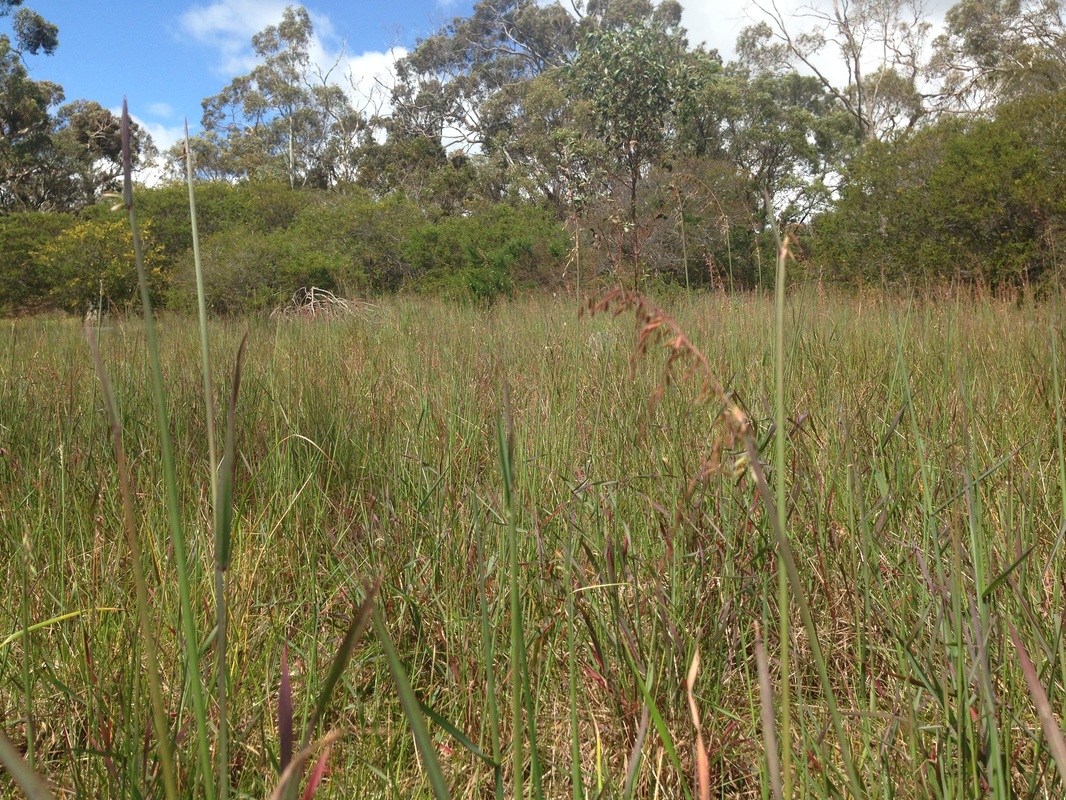
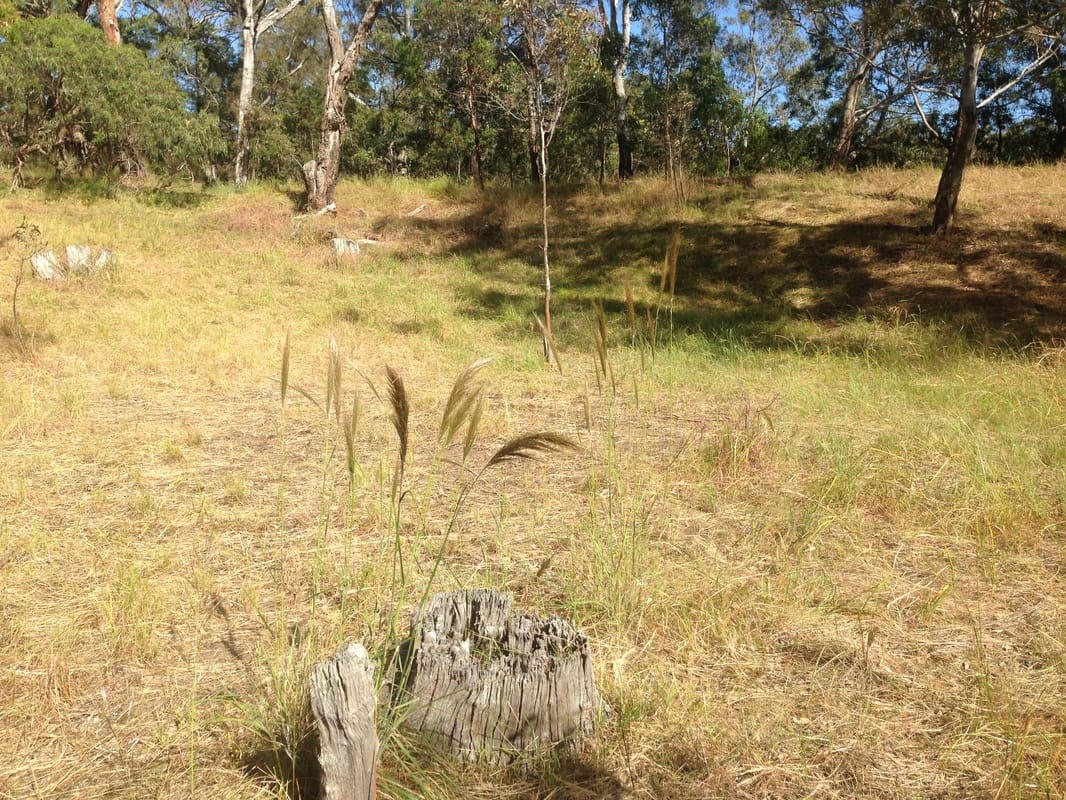
PicturePerennial Veldt Grass has taken over this grassland of Supple Spear Grass in five years. The Spear Grass is now rarely seen.
Trouble from the Veldt has appeared in my ‘backyard’ in the form of three invasive grasses that are threatening to displace remnant grasslands in three reserves that I help manage. The indigenous plants that have succumbed are extremely tough and hardy, but they are no match for this trio from the Veldt.

The South African Veldt is a wide open plain and its literal translation from Afrikaans is ‘field’, originating from Old Dutch. In South Africa the Veldt can be predominantly grasslands or a combination of grassland with shrubs and open woodlands. This type of landscape will sound very familiar to Australians.

Because of its exposed, dry climate the Veldt has produced plants that are very tough, so not surprisingly the Veldt grasses that were introduced to Australia as pasture grasses and for binding sandy soils, have adapted so well that they have invaded many waterways and nature reserves in Western Australia, South Australia and Victoria. 

The three Veldt grasses causing the trouble are Panic Veldt Grass, Ehrharta erecta, Annual Veldt Grass, E. longiflora and Perennial Veldt Grass, E. calycina. Each species of grass is very invasive, fast growing, have done well in the extreme dry of the recent drought years and adapt well to wet years as long as the soil is well drained. They seem pretty bullet proof though some chinks in their armour are beginning to appear
​
In Central Victoria near Teesdale and Inverleigh which is my backyard, these Veldt grasses have invaded grasslands and grassy woodlands, displacing many of the indigenous grassland plants. Disappointingly they are not considered pest plants by government departments because they are not a pest for the farming community, though the departments will indirectly fund their control because they are causing a loss of biodiversity.

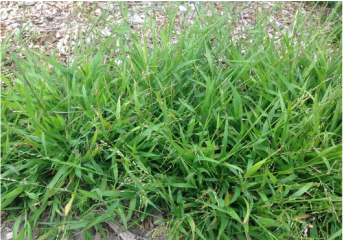
PicturePanic Veldt Grass, Ehrharta erecta
Panic Veldt Grass
This is a common garden weed that is easy to manage in a garden environment. A professional gardener I know described it as very easy to pull out by hand. It will however go from germination to seed production in only 2 – 3 weeks which enables it to spread even with the best gardening practice. It has the ability to grow in shade and under trees where other grasses don’t grow. In my own native garden it will grow unnoticed under bushy Correas and Grevilleas. Thumbing its nose at me as it appears out the top of the shrubs in late spring, having already dropped thousands of seeds for the next germination. Did I forget to mention that it will
germinate in any season?
​
Control.
Aside from hand pulling then mulching to prevent the next round of germination, I've found that spraying with Fusilade Forte at 16ml/10L water (0.8L/ha) works well. This is half the recommended rate but it works on this annual grass. This is a specific herbicide for grasses and it won’t affect woody shrubs or broad leaf plants and is reasonably safe to handle.

Also all of the Veldt grasses are weakened by heavy grazing and regular mowing, so they are usually absent from farm pastures. This is ironic since the Perennial and Annual Veldt grasses were introduced to Australia as pasture grasses.
​
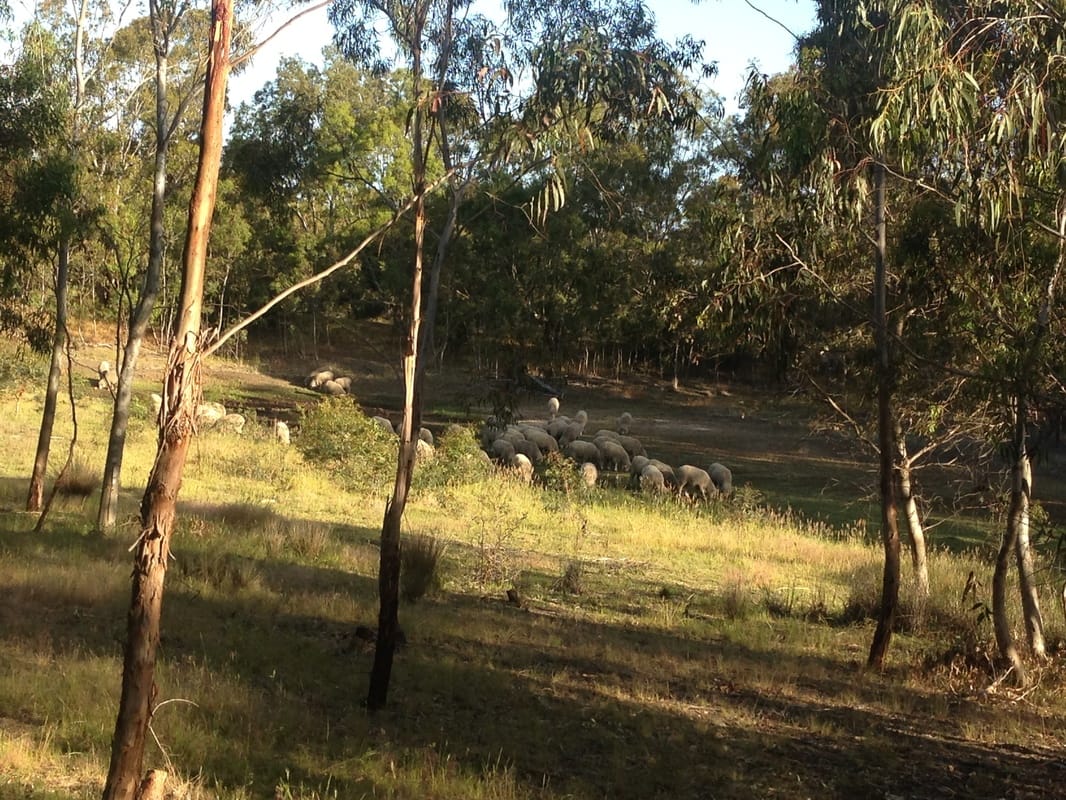
This is an observation we are planning to exploit in the smallest of the local reserves which is 8ha and fully fenced. Introducing strategic grazing with a large flock of Merino sheep should restore the balance and significantly reduce their dominance. The plan is to heavily graze the veldt grasses this year to weaken their hold. In future years we plan to remove the sheep for the spring flowering cycle of the indigenous grassland plants to enable them to re-establish.

Update on the grazing trial. 20/12/2016. See also photos below
After 30 days of grazing the flock of Merino sheep tended to target the Veldt Grasses, leaving the Spear Grass, Wallaby Grass and Kangaroo Grass untouched. After 50 days the sheep still prefer the Veldt Grasses with some trampling of native grasses. A very promising result.

​
An open area of the reserve on the northern boundary was largely ungrazed after 30 days. It is likely that dogs living in these properties made the sheep nervous because grass near an adjacent property on the northern boundary without a dog is well grazed.
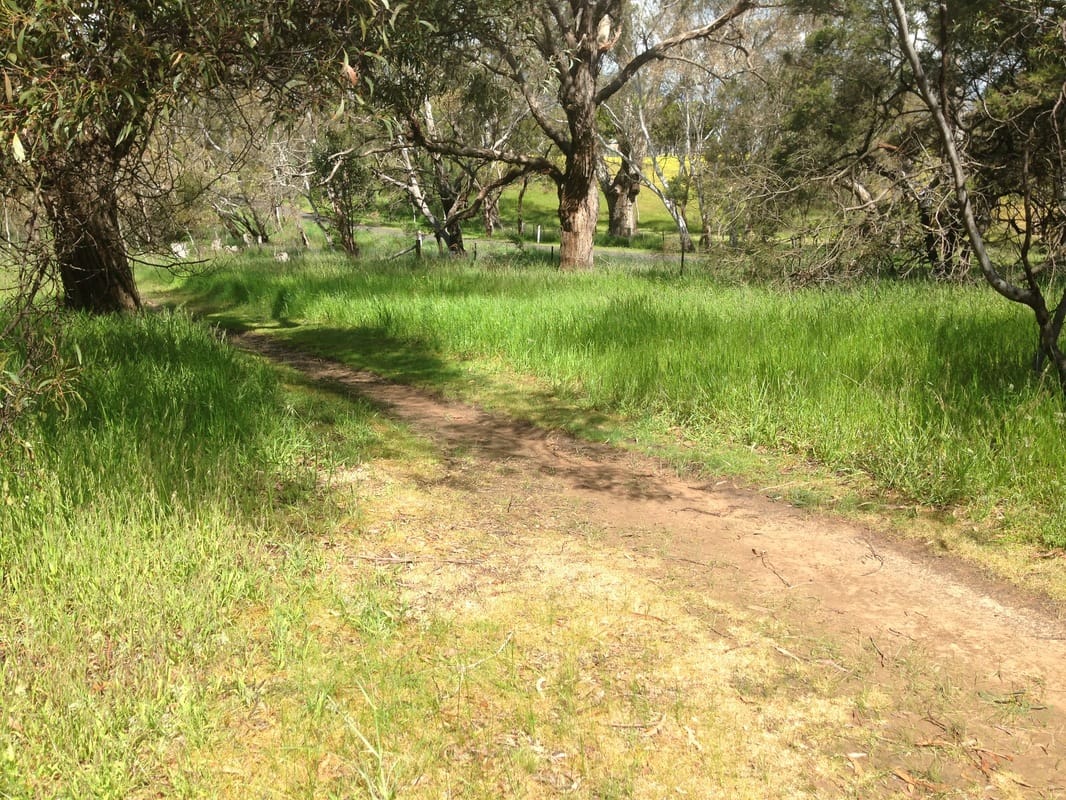
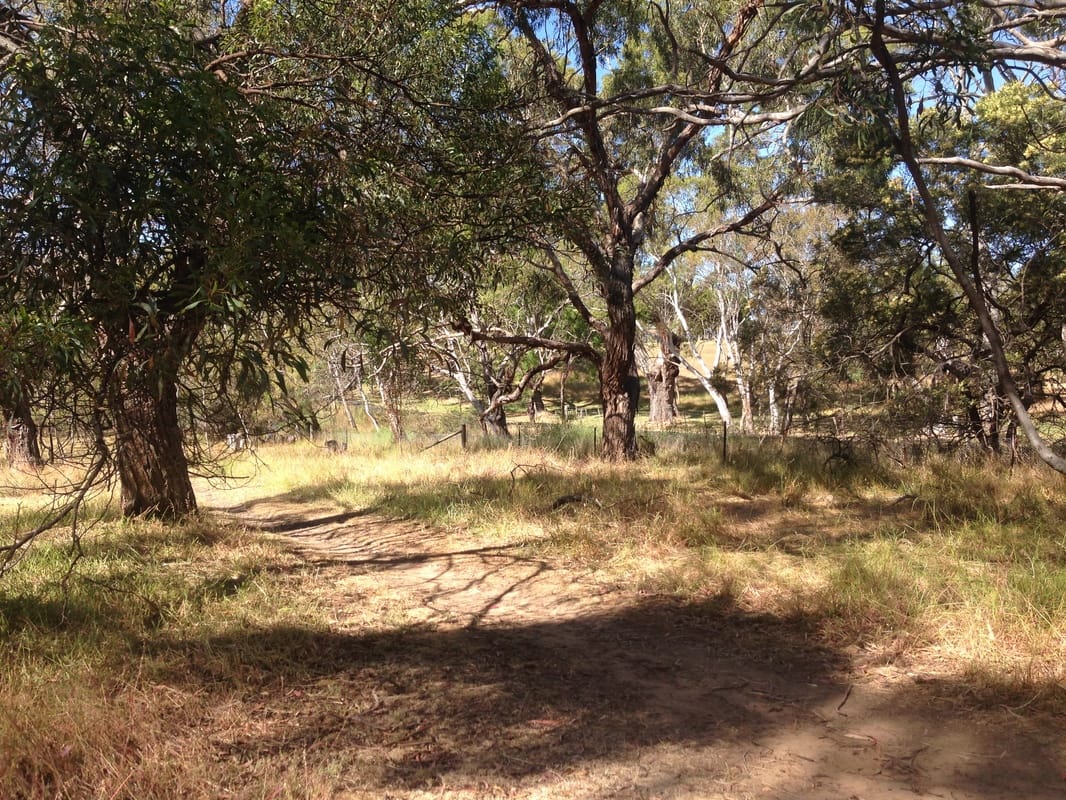
Photopoint 1. Annual Veldt Grass before grazing
Photopoint 1. Annual Veldt Grass 30 days after commencement of grazing by Merinos
Merinos, after one month, prefer to graze the Veldt Grasses and leave the Supple Spear Grass (in the foreground) untouched.
The flock of 80 Merino sheep grazing in the 8 ha reserve
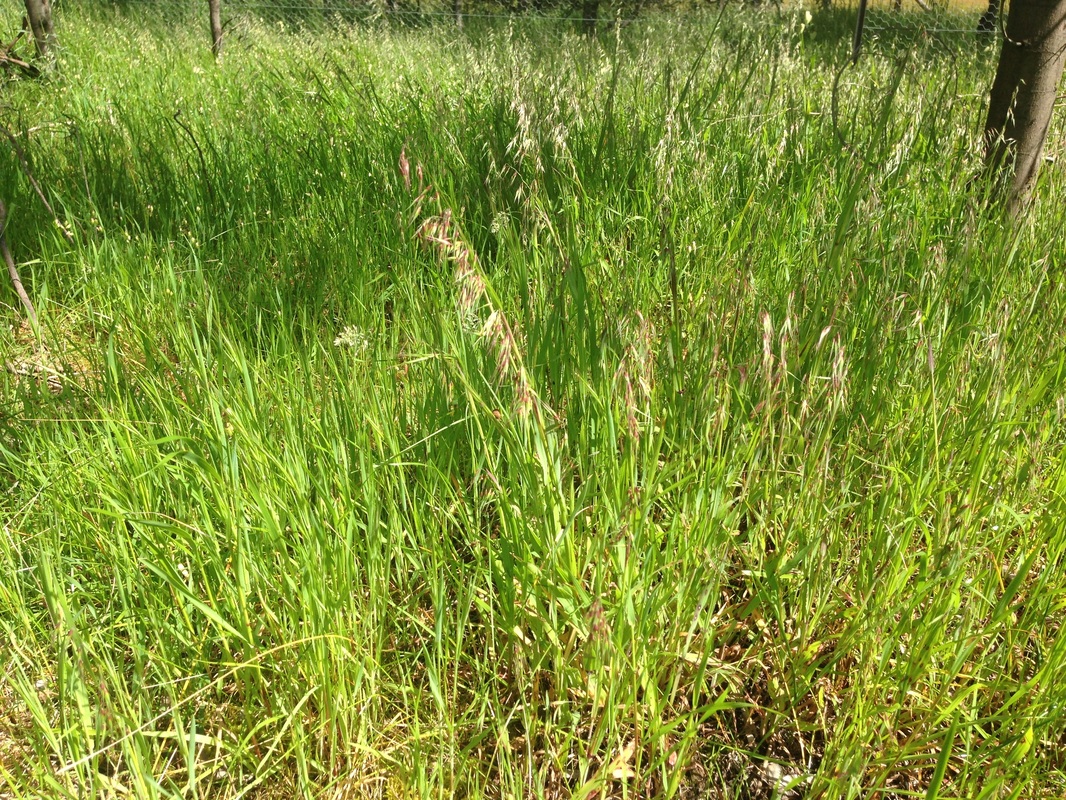
PictureAnnual Veldt Grass, Ehrharta longiflora showing typical seed set in early October
Annual Veldt Grass (AVG)
This is a broad leaf grass that is one of the first to germinate after the autumn break. A diagnostic feature of this grass is red pigmentation at the ligule where the broad leaf branches from the leafstalk. The early germination of this annual, its ability to grow through the winter months and its adaptability to grow in dry shady locations under native trees, even Drooping She-oaks that mulch the ground with ‘leaf’ litter, enables it to invade quickly, like a green blight. AVG will reach nearly a meter in height when it’s flowering.
​

It produces a dense leafy ground cover that has the potential to fundamentally change the fire risk of native grasslands and grassy woodlands. In the 8 ha reserve where the grazing trial is being held, this grass is growing at the base of Rough-barked Manna Gums, Eucalyptus viminalis ssp cygnetensis, This is a frightening prospect for the 9 residences that surround the reserve if a fire ever starts in the grass, as it will run up the loose hanging bark of the Manna Gums and into the crowns in a matter of seconds. That situation would result in glowing embers blowing for tens of kilometres putting many properties at risk
​
The Kangaroo Grass and Weeping Grasses, that the Annual Veldt Grass is displacing are much safer in the fire season. They are green throughout most of the summer and produce far less combustible matter. In rural areas these native grasses actually reduce the fire risk and are a community asset if they are kept healthy with a slow cool burn every 5 – 10 years.
​
Sadly burning doesn’t appear to be part of the answer with the Veldt grass trio as they will recover after a grass fire and may even invade the open patches (interstitial tussock spaces) created by a burn.
 
Control
As mentioned above, grazing is a powerful tool for the control of these grasses. Persistent grazing by domestic or native animals can eliminate them over a long period (10+ years). This can be deduced from its absence on private grazing properties and a recent observation of the roadside verge of the Inverleigh Nature Conservation Reserve.

Three years ago the Veldt Grasses dominated the roadside and threatened to spread into the reserve, however the resident 200 + mob of Eastern Grey Kangaroos have developed a taste for them and now keep the roadside verge neatly clipped. The Veldt Grasses are no longer conspicuous and appear to be on the retreat.
​
Spraying with Fusilade @ 16ml /10L water or Salvo 212 @ 9ml/10L water (a little more than half the Fusilade Forte rate) before September will also kill AVG while having little or no effect on orchids and herbs or the perennial native grasses that are dormant in early spring. Even though its shouldn't be necessary its recommended practice to avoid spraying the non-target plants if possible by spraying around them. This is a useful tool but is an expensive option at $1,000/day for a crew of two spray contractors. Where this method is used in one of my local reserves, volunteers with back packs do some of the spraying.

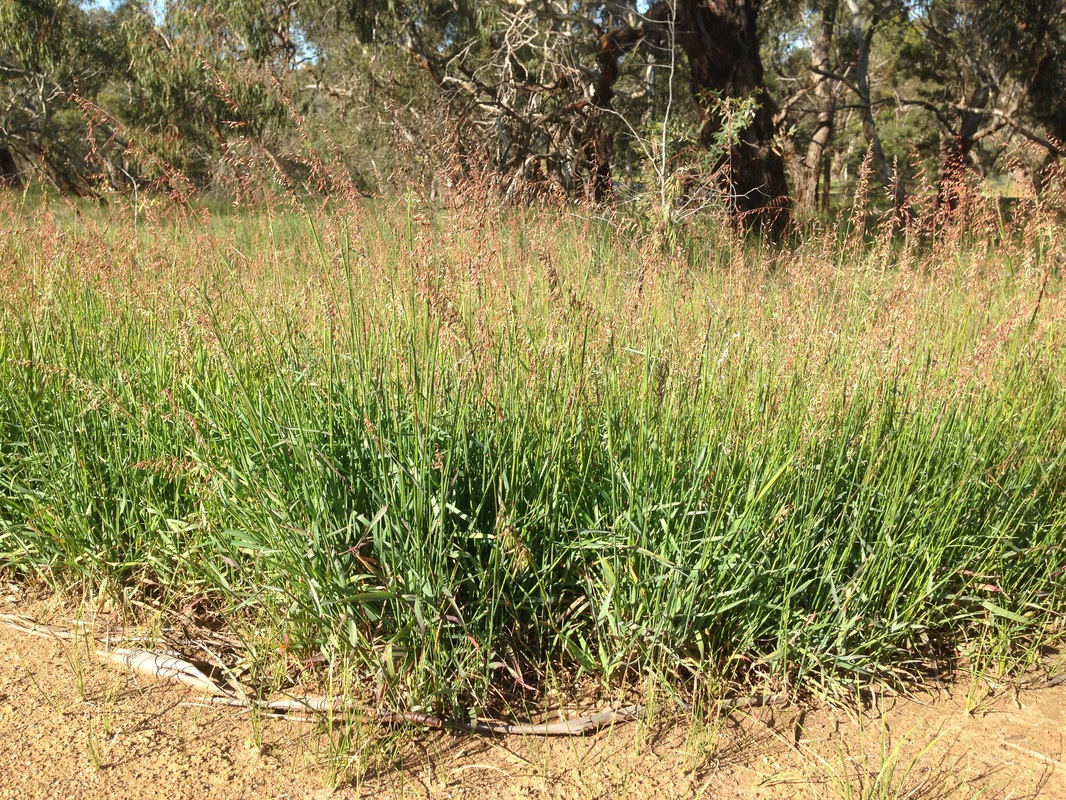
PicturePerennial Veldt Grass, Ehrharta calycina in early October
Perennial Veldt Grass (PVG)
The most noteworthy feature of this 30 cm tall clumping grass is the grey-green colour of its leaf blades and the pink tinge at the base of the clump. Like the AVG it also has a distinctive red pigment at the ligule. In October when it runs to seed it reaches a height of nearly 1m and the sprays of pink flowering stems above the leafy base are easy to identify, even on the roadside traveling at 100km/hr.

The clumps are usually well spaced to minimise competition for its shallow roots, however like the other Veldt grasses it will displace any native grasses and eventually form a pure monoculture.

​Control
Grazing is its Achilles heel, though Eastern Grey Kangaroos seem to prefer native grasses unless they are forced to develop a taste for it. Unlike the kangaroos in the Inverleigh Nature Conservation Reserve, in the 25 ha reserve that I help to manage, the 20 resident roos are spoilt for choice and prefer to leave the veldt grasses predominantly uneaten.

Glyphosate (Roundup) sprayed at the perennial rate of 1% is very effective but its not selective, so spraying tends to bare out the ground around the dead PVG. This is quickly reinvaded by new PVG plants that can germinate at any time, though mostly in spring. Herbicides Fusilade Forte @ 32ml/10L water or Salvo 212 @18ml/10L water are also effective as well as selective for grasses.
​
These invasive grasses are a quiet threat to the survival of our indigenous grasses and forbs in all the southern states of Australia. Unlike woody weeds there are no selective herbicides that can be used to control them. Some management can be achieved with herbicides by understanding the growth cycle of these plants and using herbicides that are selective for grasses, so that the herbaceous plants and woody plants are not affected. Applying herbicides is an expensive option and only a stop gap measure until grazing pressure can be used to weaken them and potentially eliminate them from our waterways and natural reserves.

19 Comments
Andrew Walters
16/5/2018 04:57:58 pm

HI Stephen,
I'm interested in your account of the use of Fusilade @16ml/10L targeting AVG amongst Kangeroo Grass
(KG) and Weeping Grass(WaG)before Sept which doesn't affect these perennial grasses. Have you tried these rates of Fusilade on Wallaby Grass(WaG) and/or Stipa Grass(SG)?
I doing some revegetation work in Adelaide and would like to know the effect of Fusilade on AVG seedlings at 3-5 leaf stage amongst SG and WaG. Have you had any experience of those?
Currently most of these C3 perennial natives are still dormant at this stage.
Thanks for your info.
Andrew W

Reply
Steve
16/5/2018 06:05:23 pm

Hi Andrew,
I think the successful use of Fusilade to kill Annual Veldt Grass while not damaging Wallaby Grass or Spear Grass is all about timing. I suspect that AVG will already be germinating in SA where there is soil moisture, so even a very low rate of glyphosate (0.3%) would kill it and wouldn’t do the dormant native grasses any harm. We have also been having some success with grazing, the observation being that AVG hasn’t survived where it is constantly grazed even though it was introduced into farms in Victoria as a pasture grass. The safest approach is to trial a small sample before you adopt a chemical for general use. I have used Fusilade around Supple Spear Grass this way very early in the Autumn after the first rains kick off AVG. We did try to avoid spraying the chemical directly onto the spear grass where we could. Lomandra and dianella also seemed immune to Fusilade in a small trial we did last year.
I hope that helps. It is difficult when exotic grasses invade native grasslands particularly when they recover well from burning as do the veldt grasses.

Reply
Andrew Walters
16/5/2018 11:12:22 pm

Hi Stephen,
Thanks for your reply.
Timing is everything. I will try out your rates of Fusilade on AVG and the other exotic grasses eg Barley Grass, Soft Brome etc in a trial patch and in another trial patch with Glyphosate at 0.3 %. I keen to kill these annual exotic weeds at the earliest stage so that they don't become too much an addition to the fuel load.
in this respect I have had some success with eliminating Silver grass (Vulpia ) by putting out Simazine as a pre emergent. This doesn't affect the Chloris even when small which I'm encouraging. This particular site where I doing this native grass restoration is in an area of about 3 Ha which has been infested with Caltrop (Tribulus terrestris). My plan is to create a native perennial grasslands to smother these burrs many of which are embedded below the soil and prevent them germinating.
Thanks
A

Jody
2/7/2019 08:35:53 am

Great article. I had been thinking of trying intensive grazing management to control perennial veldt in our regenerated timber and open disturbed grassland in late winter before beginning a regeneration program but hadn’t really found a great deal of information on its effectiveness.

Reply
Steve
2/7/2019 12:01:49 pm

Thanks Jody,
I think pulse grazing with a large flock for a short period will be an effective long term management strategy for veldt grasses. Merinos seem to love the flavour and will eat it in preference to native grasses.

I have discussed flock sizes and grazing times in another more recent blog on grazing. See the link below

https://www.recreatingthecountry.com.au/blog/grasslands-and-grassy-woodlands-in-temperate-australia-why-were-losing-the-battle-to-save-them-part-4-grazing-an-important-management-tool

Reply
Kerry
23/2/2020 03:58:08 pm

Hi Stephen.
Where can I buy Fusilade in the Geelong area? I was given some by a horticulturist and I’m just about out of it. I can’t seem to find a stockist.
Kerry

Reply
Steve
24/2/2020 12:33:54 pm

HI Kerry,

I've made some inquiries on your behalf and suggest that you substitute Salvo 212 when your supply of Fusilade runs out. This product is available in Geelong at the local farm supplies for $79/L. The good news is that this herbicide has nearly twice the concentration of the active chemical Fluazifop, so you can use it at half your usual rate.

I also spoke to a contractor who has used Salvo 212 to selectively control grasses and he is very happy with the results.

Fusilade Forte is still on the market so you could try local farm supply companies if you prefer this product.

Take care when your handling these chemicals and good luck with your grassy weed control.

Reply
David
10/10/2020 12:15:44 pm

Steve, thanks for proving this useful information. I have a buffalo lawn which is infested with panic veldt grass The lawn area is large enough to deter me from hand pulling so I am hoping to rely on herbicide control to eliminate the weed. I suspect that Fusilade will be detrimental to the buffalo but I will experiment using different concentrations to see how the buffalo fares. Are you aware of any trials in progress targeting the eradication of this weed from lawns?

Reply
Steve Chesh
23/10/2021 10:37:13 pm

Hi David, how did you go trying to eradicate Veldt out of your lawn. Im interested as I have a client with it in his couch.

Reply
David Knox
25/10/2021 09:31:43 am

Hi Steve,

I'm still battling with this weed so I'm afraid that nothing has changed. In a lawn situation hand pulling is probably still the best option for reducing weed density, slow and painful as it is. A later development is from an Aust company in Old which I have been in contact with, Indigo Specialty Products, who are aware of the weed potential of Panic Veldt and are working on a herbicide targeting this weed. Unfortunately they say that government licensing requirements means that they won't have the product available for sale for another 3 to 4 years. At least someone has recognised the invasive nature of this plant.

Steve
14/10/2020 04:46:51 pm

Hi David,
The Panic Veldt grass growing in your buffalo lawn is an interesting challenge. I would approach it exactly as you have suggested trialing different Fusilade concentrations.

Timing your spraying will also influence the buffalo grass which I think is dormant in the colder months. Fusilade is likely to have little or no effect if it is sprayed when at this dormant stage. Hopefully there will be a time in early spring when the Panic Veldt grass starts to germinate and the buffalo grass is still dormant.

Good luck with your trials and let me know if you come up with a working strategy.

Reply
Rob Jones
5/1/2022 05:56:13 pm

Hi Stephen, interesting to hear about the fight to control the invaders. I am a little surprised that (in the caption to the top photo) you mention that the Veldt grasses have displaced the native "spear grass." If this is the same "spear grass" as is all over my block (41 Ha in Central West NSW) then all I can say is "send me all the Veldt Grass you don't want!" This stuff is truly evil - millions of tiny little needle-sharp spikes that get into everything, your feet are being tortured after the first twenty paces. I've heard it can cause health problems in dogs, don't know about that but last year was walking around for months with speargrass seeds embedded in my ankles, eventually they're 'ejected' after causing local swellings and pain. This year there's even more of the stuff (no grazing stock except the roos) - its unbelievable how nature can fashion something so sharp, resilient, and thoroughly unpleasant to deal with.

Reply
Steve
6/1/2022 05:25:52 pm

Hi Rob,
Thanks for describing your regrettable experiences with spear grass. I have had similar experiences with the seeds of local spear grasses, though here they tend to grow in drier more exposed locations in quite open communities. I wonder if you could have Chilean Needle Grass, Nasella neesiana. It produces the dense monocultures that you have described. I hope you don't.

You wouldn't find the Veldt grasses useful because they mostly disappear from the grazing properties where they don't tolerate the heavy grazing of sheep or cattle. They grow best in nature reserves where they displace all the native grasses and herbs and then become big a fire hazard in the summer.

Reply
Rob Jones
7/1/2022 10:52:39 am

Hi Steve,

yes the possibility of 'Chilean Needle Grass' occurred to me - not least because there's a published map on the 'Department of Primary Industries' (dpi) website that shows there's known outbreaks in the wider area. Last year I sent some photos of the seed & a clump of the grass to my local dpi office, the conclusion was ...."I think it is definitely an Austrostipa, maybe A. scabra.".... The photos on the 'Noxious weeds" site (for CNG) don't look quite the same as those at my place - that said, hey I'm a "Townie" after all & the learning curve is very steep!

The whole process since getting this block has been one of 'escalation' - first thing I found while wandering around aimlessly was a clump of blackberry bushes - shock, horror (I was having major issues elsewhere with a domestic garden continually invaded by blackberries!), then later "what's that purpley little flower that's growing everywhere?" (yup, Blue Heliotrope!), later still "Hey there's another purple flower much taller than the first" (you guessed it - Pattersons Curse). From my initial determination to poison the blackberries I've realised they're relatively benign - don't spread in the soil & climatic conditions there. Even the Pattersons I don't mind too much as it seems to be confined to discrete areas & its relatively easy to hand-pull, comes out with a satisfying 'thunk.' The heliotrope though - that's one that still gives me nightmares - if I can get to sleep after having my legs shredded by the speargrass!

Dr Lou M Giannini
22/10/2022 02:27:57 pm

Hi Veldt grass enemies,

Has any progress been made in eradicating this dreadful weed from lush lawns like Winter Green or Couch like lawns?

I wish I could spray with something which does not damage my lawn. I am in Perth and I find it a lost cause in trying hand pulling the thing.

Regards,

Lou

Reply
Steve
22/10/2022 03:17:37 pm

Hi Dr Lou,
Sorry to hear about your problems with veldt grass invading your lawn. I assume that you have either annual veldt or panic veldt that you would like to control in your lawn. If you have perennial veldt, hand weeding or painting the leaves with gylphosate will kill them.
You should be able to control the annual veldt grasses with a combination of well-timed spraying with a low rate of glyphosate and hand weeding.
I have found that the veldt grasses Achilles heel is its very early germination. It starts to appear in our native woodland areas in southern Victoria in July or earlier, when other grasses are still dormant. This is when I would do a test spray with a low rate of glyphosate, about half of the recommended rate for annual grasses. Couch grass for instance is dormant at this time, which suggests that it will be unaffected by herbicide. Experiment on an out-of-the-way corner of your lawn before you tackle the whole lawn. It will take quite a few years to exhaust the veldt grass seed bank that is already established, but eventually you will win.

Reply
Dr Lou
22/10/2022 05:07:27 pm

Thank you Steve. I assume I have the perennial type as it is there every year.

I don't know if it is the right time of the year to spray or paint the weed now. What do you think?

Is glyphosate available at Bunnings?

Thanks again,

Lou

Steve
22/10/2022 06:03:58 pm

Hi Dr Lou,
You can buy glyphosate at Bunnings, big hardware stores and farm supply stores. Since it is likely that your veldt grass is perennial, I would suggest that you allow patches of your lawn to grow long enough for the veldt grass to reach about 20 cm tall. This will enable you to paint each plant with the recommended rate of glyphosate (usually 1% for perennials). In this way, you will gradually eliminate them from your lawn.

Reply
Lou
22/10/2022 11:23:07 pm

Thanks Steve. You have been very helpful.

Reply


Leave a Reply.

    Picture
    Stephen Murphy is an author, ecologist & Master Treegrower. He has worked as a nurseryman and designer of natural landscapes for over 30 years. He presently  advises farmers, small landholders and governement agencies on sustainable landsacape design.
    His recent book:​
    ​
    'RECREATING the COUNTRY'
    Ten key principles for designing sustainable landscapes 
    Second edition Updated & expanded

    Click on the image below to read more
    Picture
    Picture
    Click here
    ​to the
     
    ​'Easy blog finder
    '

    RSS Feed

      To subscribe to monthly blogs please leave your email below. 

    submit
Picture

Site content © Stephen Murphy, 20​25

  • Home
  • be Challenged
    • Design to restore lost biodiversity >
      • Diversity >
        • Making a list of plants for revegetation
      • Structure >
        • Ecology Snapshot - wildlife and their habitat
      • Species survival
      • Location - connections
      • Blueprint for Recreating the Counrty
    • Biodiversity and profit >
      • Designing for profit
    • Managing sustainable biorich landscapes
  • be Informed
    • Indigenous flora of the Geelong district >
      • Indigenous plants - what & why
      • Acacias, wattles of the Geelong Region
      • Acacias - the cafes of the bush
      • Allocasuarinas/drooping sheoaks, Black Sheoak & Callitris glaucophylla/cypress-pine
      • Bursaria spinosa, Sweet Bursaria
      • Eucalypts, The Sentinals
      • Exocarpos cupressiformis, Cherry Ballart
      • Moonah, Melaleuca lanceolata
      • Small riparian myrtles
      • Wedge-leaf/Giant Hop-bush, Dodonaea viscosa
      • Wild Plants of Inverleigh
      • Tree Violet - as tenacious as a terrier
    • Nurseryman's diary >
      • Regent Honeyeater - a good news story
      • Give me a home among the gum trees
      • Symbiotic fungi
      • The joys of seed collecting
      • Landcare, who cares?
      • The last Silver Banksia
      • Neds Corner
      • River Red Gums and the Tuscan monks
  • be Entertained
    • Stories for children >
      • Amie and the intoxicated kangaroos
      • The Little Green Caterpillar
      • B'emus'ed - a Christmas tale of bursairas and emus
    • Stories about the natural world >
      • Brushtail
      • Cormorant
      • Eastern Bettongs. 'Truffle junkies' or 'ecosystem engineers'
      • Richards Sweet Rewards
      • Coxy's Curse
      • How the River Red Gum came to be - A dreamtime story
  • Bookshop
  • Blog
    • Easy blog finder
  • Contact